
Dryer Repair
Home / Appliance Repair / Dryer Repair
Tell us about your appliance and we’ll send a free, no-obligation quote. Prefer to talk now? Call (202) 200-8501.
(202) 200-8501
info@appliancegasket.com
Washington DC, Northern Virginia & Maryland
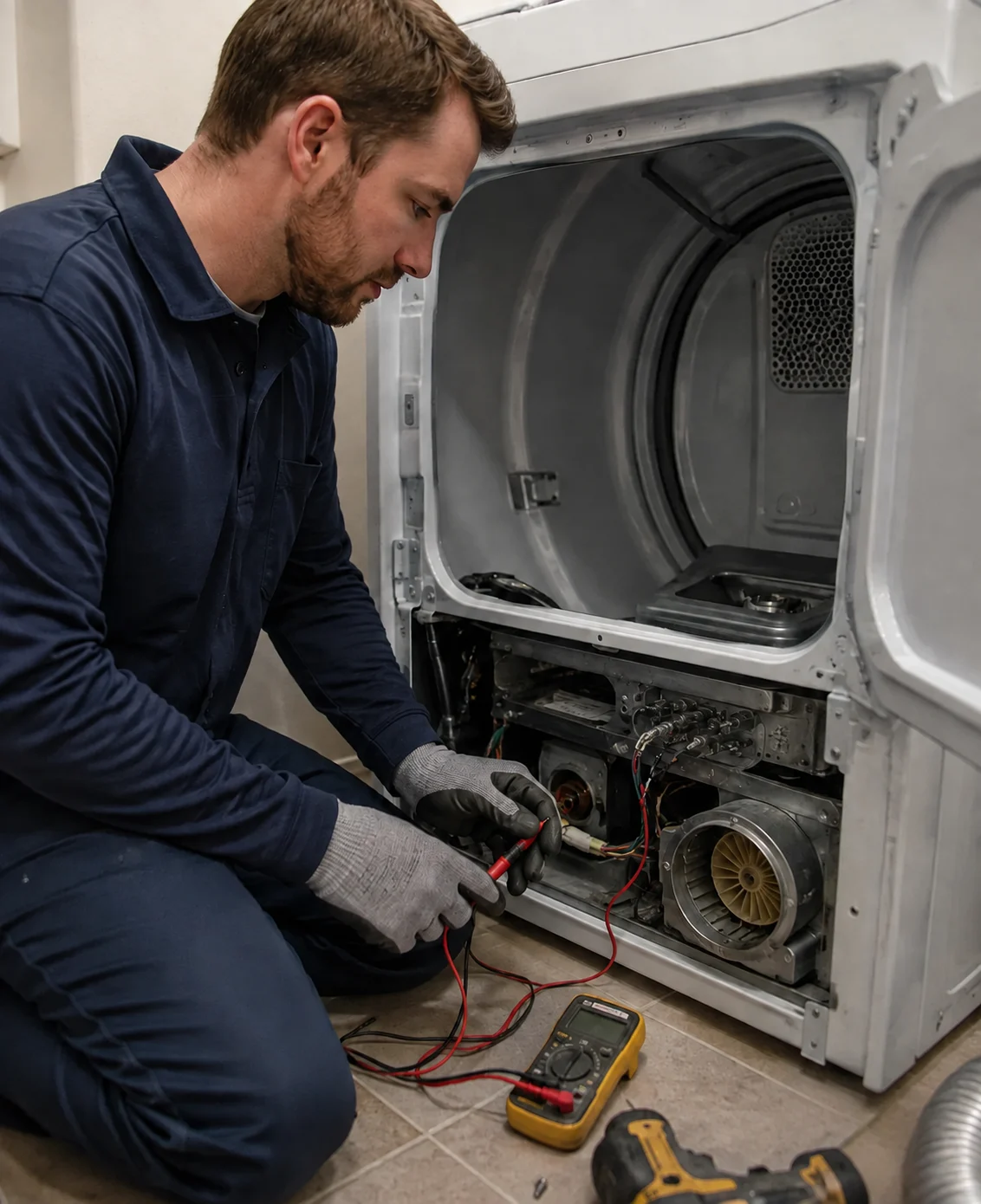
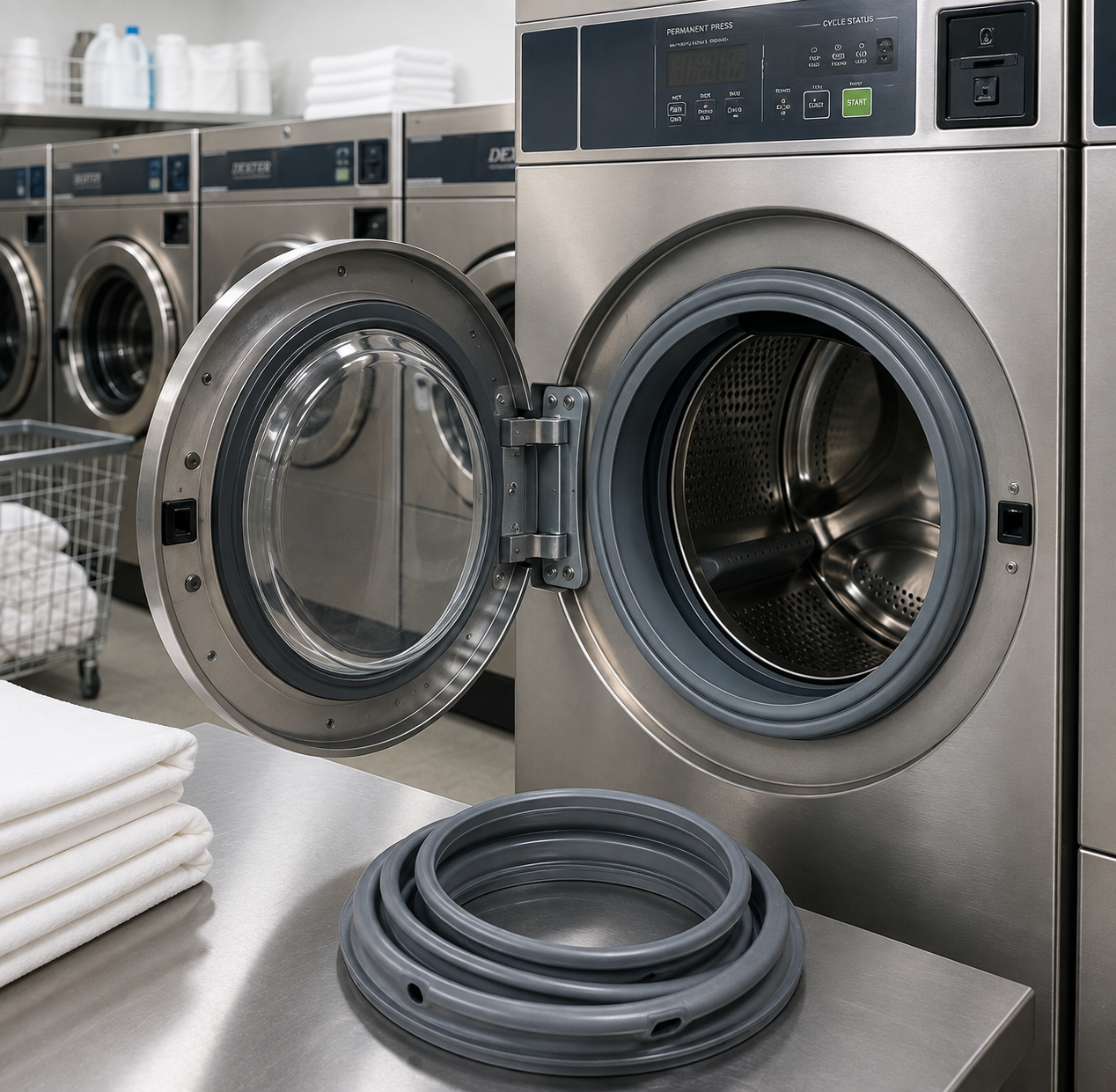
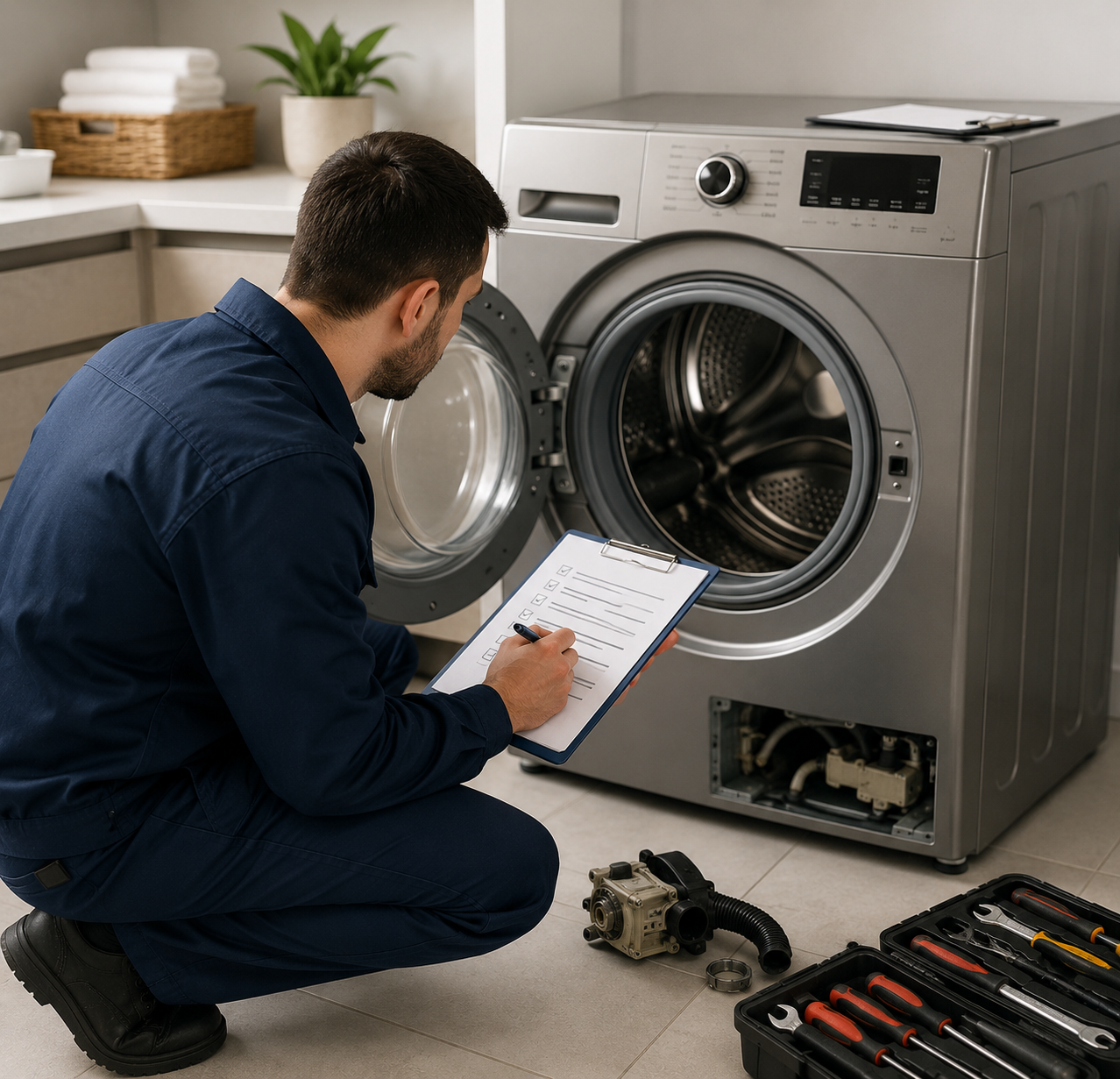
Still waiting for clothes to dry after a second cycle? A dryer that runs without heat, stops unexpectedly, or starts squealing needs the cause checked before another part is ordered. Appliance Gasket provides dryer repair across Washington DC, Northern Virginia, and the nearby Maryland suburbs.
Our appliance repair and seal-replacement services cover more than the most obvious symptom. Tell us whether your dryer heats, tumbles, and finishes its cycle so we can start with a useful picture of the problem.
Getting dry clothes again starts with understanding whether heat, airflow, drum movement, or a seal is responsible. Our service brings those concerns into one repair discussion.
Drum and felt seals are part of Appliance Gasket's specialty. We consider them when relevant while also assessing the heating, movement, or airflow complaint you report.
Gas, electric, stacked, and closet-installed dryers can have different service requirements. We ask about your configuration and access so the appointment matches the equipment.
You receive the repair quote before work starts. If an external exhaust problem calls for separate work, that scope can be clarified instead of assumed to be included.
You can call or text with “no heat,” “too slow,” or “making noise.” A model photo helps, but you do not have to identify the failed part to request service.
These functions work together, but one can fail while another keeps operating. Knowing that the drum turns does not establish that the heating circuit is working. Likewise, heat inside the drum does not prove that moisture is leaving the appliance properly.
The inspection depends on whether the dryer is gas or electric. Heating components, temperature controls, safety devices, and the power or fuel supply can be relevant. We do not recommend a heating element simply because the clothes come out cold.
Describe whether this affects every load or mainly heavy items. Airflow restrictions, moisture sensing, heat output, and laundry that enters the dryer unusually wet can all matter. If an external exhaust duct needs work beyond the dryer itself, that scope should be identified separately.
Noise that follows the drum’s rotation points the inspection in a different direction from a blower noise. Depending on the model, belts, rollers, pulleys, bearings, and drum seals may need assessment. A short recording can help you explain an intermittent sound, but do not run an appliance that appears unsafe just to record it.
Tell us whether the display remains on, the door latches normally, or an error code appears. Door switches, controls, and temperature-related shutdowns need different checks. Photograph the code before resetting the controls.
A worn drum or felt seal can affect the way a dryer operates. It is a relevant part of the inspection, particularly when clothing catches at the drum edge or the seal is visibly damaged. It does not explain every no-heat or slow-drying complaint.
Appliance Gasket brings seal replacement and mechanical repair into the same service discussion. The aim is to match the work to the diagnosed problem and explain the proposed repair before you approve it.
Need help describing the fault? Text your model and what happens during a cycle. You do not need to name the failed component.
Tell us the fuel type and whether the dryer is freestanding, stacked, or part of a laundry center. For a ventless condenser or heat-pump dryer, send the full model number to confirm service support. These units should not be treated as conventional vented dryers.
Our brand range includes names such as Whirlpool, GE, Maytag, Samsung, LG, Frigidaire, and Electrolux. Model identification matters for the correct belt, seal, sensor, or heating component.
For stacked units, send a photo of the installation and mention closet doors or limited working space. Please leave the equipment in place; access and any need to separate units can be discussed before the visit.
The proposed work depends on the fault, parts, and access. Ask about any diagnostic charge at booking and the repair’s applicable parts-and-labor terms before approval. A same-day visit does not necessarily mean that a model-specific part is available that day.
If clothes are already unusually wet at the end of the washer cycle, mention that too. Our laundry appliance services include washer repair, which may be relevant to the drying complaint.
We cover Washington DC and communities including Falls Church, Fairfax, McLean, Silver Spring, Bethesda, and Rockville. Provide your ZIP code to confirm service availability. Apartment and condo customers should include building access and laundry-closet details with the request.
Some models have an extended-tumble or wrinkle-care setting that moves clothes after drying ends. Check the selected option in the manual. Report it if the behavior is new, does not match the setting, or includes another fault.
Automatic cycles can adjust to load conditions rather than count down like a fixed timer. Note whether clothes actually reach the intended dryness. A changing estimate alone does not establish a failed control board.
Ask when scheduling whether a test load would be useful. Otherwise remove laundry when safe and clear access to the dryer. Do not operate an overheating, burning-smelling, or electrically unsafe machine to prepare for the appointment.
Include both appliances and both symptoms in one request. We can check scheduling and the required scope together. Any additional diagnostic charges or repair prices should be confirmed before work is approved; a bundle discount is not assumed.
No automatic rule requires replacing both. Consider the dryer’s diagnosis separately. With stacked equipment, compatibility of the retained appliance and the stacking arrangement matters if you later choose replacement.
Describe the original symptom, work performed, and whether the problem returned immediately or later. Share the invoice or part information if available. Contact the previous repairer about existing coverage before authorizing a new paid repair.
Stop using it and arrange an assessment. Do not keep restarting it or resetting the breaker. If you smell gas, leave the area and call 911 and your gas utility from a safe location.
Repeated cycles and growing piles of damp clothes are a reason to get the fault assessed. Appliance Gasket combines dryer repair with seal expertise and a quote before approved work, so you can make a clear decision about the machine you already own.
Call (202) 200-8501 to check a dryer appointment in your ZIP code. Or text the brand and symptom now; add a model photo if available.
Range & Stove Repair
Email us : info@appliancegasket.com
Call us on : (202) 200-8501