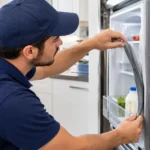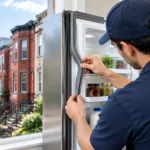

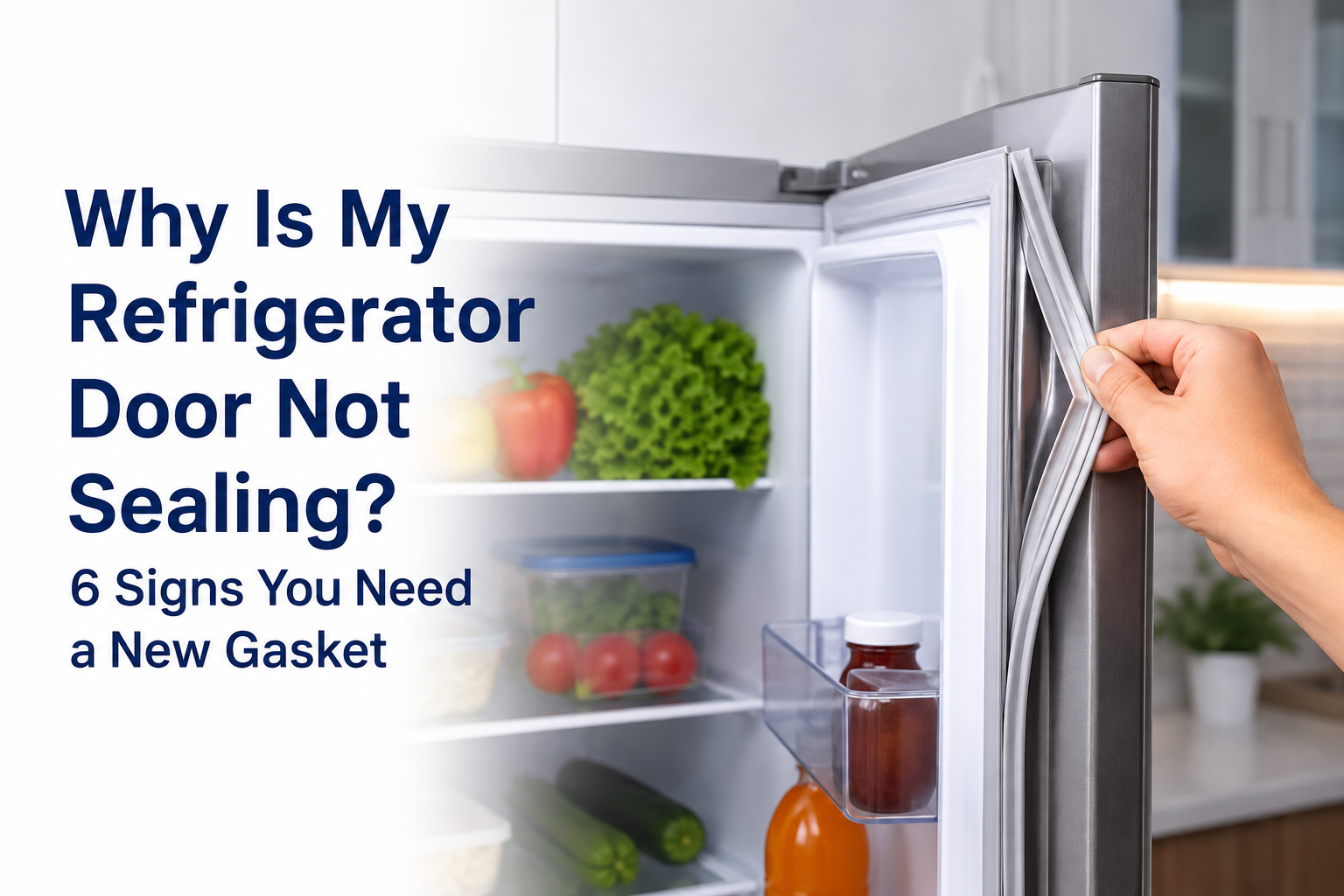
A refrigerator door that won’t stay shut, condensation inside the frame, cracked or flattened rubber, a climbing energy bill, food spoiling faster than usual, or a gasket that feels hard and brittle all point to the same thing: a failed door seal. The fix is almost always the gasket itself, not the whole refrigerator, and you can confirm it yourself in about two minutes with a dollar bill.
Key Takeaways
-
- Six real signs point to a failed gasket: a door that won’t stay shut, condensation or frost, cracked or flattened rubber, a rising energy bill, faster food spoilage, and rubber that’s gone hard or brittle.
-
- The dollar bill test confirms it in under two minutes, and it works best when you test multiple points around the full door, not just one spot.
-
- DC, Maryland, and Northern Virginia summer humidity makes a borderline seal fail faster and condensation show up sooner than it would in a drier climate.
-
- Most of the time, replacing the gasket alone fixes the problem completely, no need to replace the refrigerator.
- Confirmed it’s the seal? See our refrigerator gasket replacement service for same-day options across DC, Maryland & Northern Virginia.
Sign 1: The Door Won’t Stay Shut on Its Own
A healthy gasket grips the door frame with real magnetic pull, the door should stay closed on its own without needing a push or a slam. If you find yourself leaning on the door, or it swings open slightly on its own after you let go, the gasket has lost its grip on the frame, even if the rubber itself doesn’t look visibly damaged.
Sign 2: Condensation or Frost Inside the Door or Freezer
Warm, moist air slipping past a failed seal condenses the moment it hits the cold interior, usually showing up first along the door edges and in the freezer. This isn’t the same as normal, brief condensation right after you close the door, persistent frost or water droplets that don’t clear up point to warm air getting in continuously rather than a one-time event.
Sign 3: Visible Cracks, Tears, or Flattened Rubber
Run your fingers along the entire gasket, not just the parts you can see easily. Cracks, tears, or spots where the rubber has flattened and lost its rounded profile all mean the seal can no longer close the gap it’s supposed to close, even in sections that still look fine at a glance.
Sign 4: Your Energy Bill Is Climbing With No Other Explanation
According to ENERGY STAR, an old or poorly sealed refrigerator can use about 20% more energy than a properly sealed one, and checking the door seals is one of their own recommended steps for reducing a refrigerator’s energy use. If your utility bill has crept up and nothing else in the house has changed, a compressor running overtime to compensate for a leaking seal is one of the most common, and most fixable, explanations.
Sign 5: Food Spoiling Faster Than It Used To
Inconsistent internal temperature from a leaking seal often shows up in your food before it shows up anywhere else. Milk turning sooner than expected, produce wilting faster, or the refrigerator section feeling noticeably warmer near the door than in the back are all early signs, often appearing before any frost or visible rubber damage.
Sign 6: The Gasket Feels Hard, Brittle, or Loses Its Grip
Press on the rubber itself. A healthy gasket feels soft and pliable, with real spring to it. A gasket that’s gone stiff, hard, or brittle has lost the flexibility it needs to seal against the frame, this typically happens with age (most gaskets last 8 to 15 years) or from repeated contact with harsh cleaning chemicals.
The Dollar Bill Test: How to Actually Check It Yourself
This is the fastest way to confirm a suspected bad seal, and it takes about two minutes.
-
- Clean the gasket first. Wipe it down with warm water and mild dish soap. Crumbs, sticky residue, or dust can hold a dollar bill in place even where the rubber itself isn’t actually sealing, which will give you a false pass.
-
- Close the door on a dollar bill, with about half hanging out. Close the door normally, don’t slam it.
-
- Pull the bill out slowly. A healthy seal grips firmly, you should feel real resistance, and the bill may even tear before it slides free.
-
- Test multiple points around the entire door, top, bottom, and both sides, not just one spot. A gasket can seal perfectly on three sides and fail only at one corner.
-
- If the bill slides out with little to no resistance at any point, that section of the seal isn’t doing its job.
If a spot fails the test but the gasket still looks clean and undamaged, try cleaning it again and retesting, a dirty seal can sometimes mimic a failed one. If it still slides out easily after cleaning, the gasket itself needs replacing.
Why This Shows Up More in DC, Maryland & Northern Virginia Summers
Condensation from a failing seal is worse in the DC, Maryland, and Northern Virginia region during summer than it would be in a drier climate, because the moisture meeting cold air through a leaking gasket has more humidity to work with in the first place. A seal that’s borderline in the spring can start showing visible condensation and frost by mid-summer, simply because the air pushing past it carries more moisture. If you’ve noticed new condensation or a musty smell around the door specifically in the last few months, seasonal humidity is likely accelerating a seal problem that was already developing, not causing a new one on its own.
Is It the Gasket, or Something Deeper?
In most cases, if the compressor still runs and the freezer still freezes, and the only issues are the ones covered above, the gasket alone is the fix. It’s worth ruling out a deeper problem only if the seal issue is showing up alongside something else, like a compressor that won’t hold temperature or a defrost system that’s already failed. Our refrigerator gasket replacement page walks through that repair-or-replace distinction in more detail if you want to confirm which situation you’re in before booking anything.
Get It Fixed Today
Appliance Gasket Falls Church, Virginia 22041 Call: (202) 200-8501 Email: info@appliancegasket.com Mon-Sat, 8am-6pm
Send us a photo of your gasket and your refrigerator’s model number and we’ll tell you straight whether it’s the seal or something deeper, no charge for the advice. Get a free quote or call before noon for same-day service across DC, Maryland & Northern Virginia.
About This Guide
This guide was written by the Appliance Gasket team, a mobile gasket and seal specialty service serving DC, Maryland & Northern Virginia for 4 years.
Frequently Asked Questions
How do I know if my refrigerator door seal has actually failed?
Watch for a door that won’t stay shut on its own, condensation or frost inside the door or freezer, visible cracks or flattened rubber, a climbing energy bill, food spoiling faster than usual, or a gasket that feels hard and brittle. Any one of these on its own is worth checking with the dollar bill test.
What’s the dollar bill test and how do I do it?
Clean the gasket first, then close the door on a dollar bill with half hanging out and pull it out slowly. A healthy seal grips firmly and resists. Test multiple points around the entire door, not just one spot, since a gasket can fail in just one section.
How long does a refrigerator door gasket usually last?
Most gaskets last 8 to 15 years under normal use. Frequent door opening, harsh cleaning chemicals, and items in the door shelves that block full closure can all shorten that lifespan.
Does humidity actually make a refrigerator seal fail faster?
The seal itself doesn’t fail faster from humidity alone, but a borderline seal will show condensation and frost sooner in a humid climate, since there’s more moisture in the air to condense once it gets past a weak spot in the gasket. This is why DC, Maryland, and Northern Virginia homeowners often notice seal problems more in summer.
Can I fix a bad refrigerator gasket myself, or do I need a technician?
Yes, if you’re comfortable with it. The gasket has to match your exact brand and model to seal properly, a universal-fit replacement is one of the most common reasons a DIY fix still leaks. Send your model number and we’ll match the exact part, whether you install it yourself or want it done for you.
Do I need a new refrigerator if the gasket has failed?
Almost never. If the compressor runs and the freezer still freezes normally, replacing the gasket alone fully restores the seal. A new refrigerator is only the better call if the seal problem is happening alongside a separate mechanical failure.