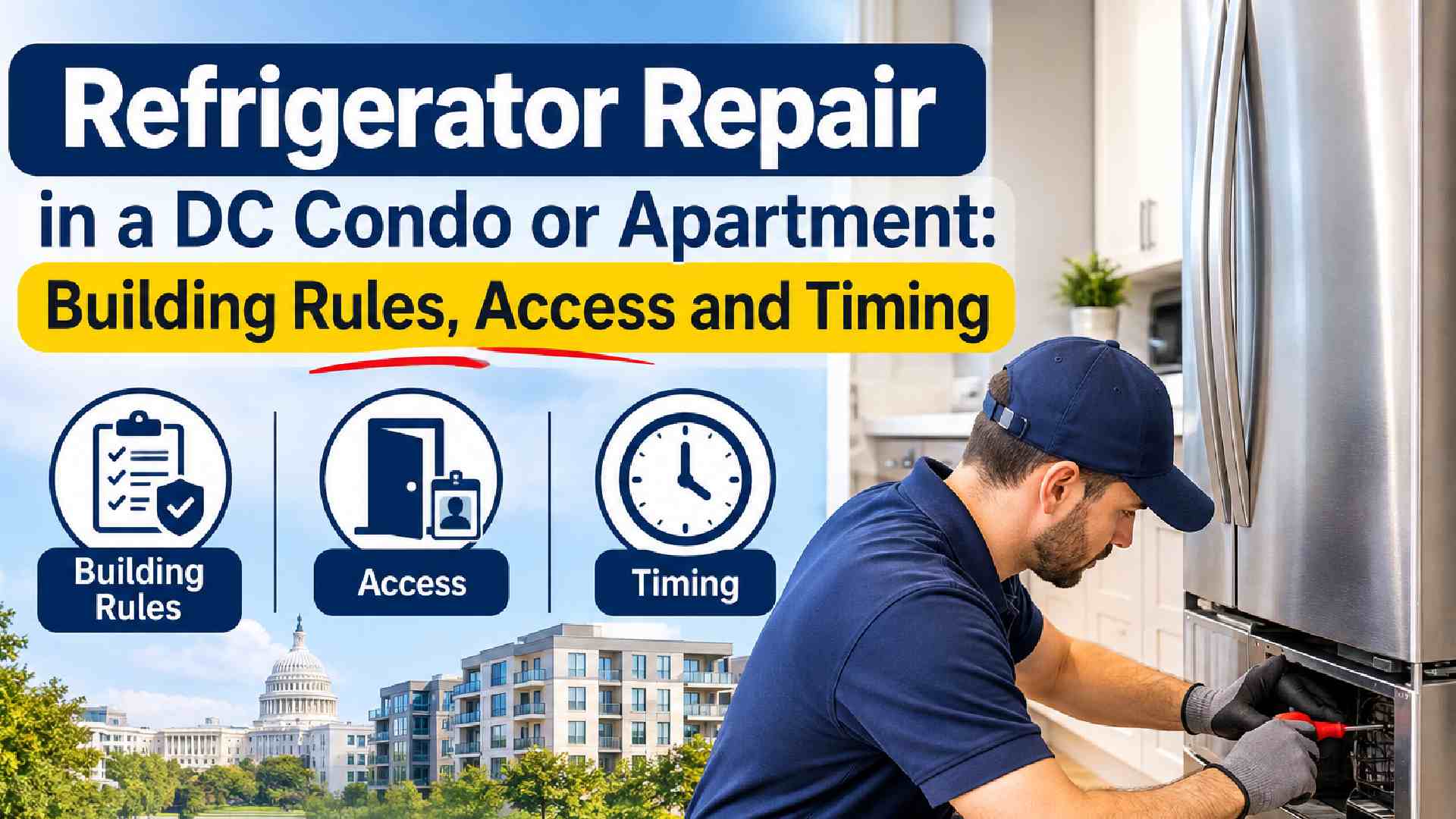
Finding reliable refrigerator repair DC condo services takes extra planning. Your building may require approval before a technician can enter. Parking and service elevator access may also need to be arranged.
The repair itself may be simple. A fan, drain line, door seal, or defrost part may need work. But building rules can delay the visit.
Before you book, ask management about insurance, work hours, and building access. Share these rules with the repair company. A little planning can help avoid delays and extra trips.
This guide explains what condo owners and renters should know before booking refrigerator repair in Washington, DC.
Key Takeaways
- Ask if your building needs a certificate of insurance (COI).
- Check work hours, parking rules, and elevator access.
- Tell the front desk about the repair visit.
- Renters should report fridge problems to their landlord in writing.
- Send a photo of the fridge model tag before the visit.
- Keep fridge food at 40°F (4°C) or below.
- Report leaks to building management if water may reach another unit.
Why Is Refrigerator Repair DC Condo Service Different From a House Call?
The fridge works the same way in a house or a condo. The main difference is building access.
At a house, the technician can park nearby and walk to the kitchen. A condo visit may take more steps. The technician may need lobby access, front desk approval, or a booked service elevator.
Building management sets these rules.
For example, a technician may arrive at 10 a.m. But the front desk may have no record of the visit. The building may also need a COI. No one sent it. The service elevator may be booked until noon for a move-out.
The technician cannot start until access is clear. One email the day before could prevent these delays.
Building type matters, too. Newer towers in Navy Yard, The Wharf, and Southwest Waterfront may need loading dock access and elevator bookings.
Older condos on Capitol Hill or in Logan Circle may have fewer rules. But their stairs and halls can be tight.
Buildings in Arlington, Bethesda, and Silver Spring may have similar rules. Always check with your own building manager. Rules can vary by property.
What Should You Ask Building Management Before You Book?
Contact the management office before you book. Ask for the rules in writing. Then send the answers to the repair company.
| Question to Ask | Why It Matters |
| Does the building need a COI? | The company may need to show proof of insurance. |
| Does the COI need special names or terms? | Management may have its own insurance rules. |
| What are the approved work hours? | Some buildings limit the days and hours for repairs. |
| Is a service elevator reservation needed? | The technician may need to book it before arrival. |
| Where can the technician park? | Visitor parking and loading areas may have different rules. |
| Are floor covers needed? | Moving a fridge can scratch floors or damage nearby areas. |
| Are there quiet hours? | Some buildings limit noisy work. |
| Where is the fridge water shut-off valve? | This can help if the ice maker or water line leaks. |
What Is a COI for Appliance Repair?
A certificate of insurance, or COI, shows key details about a contractor’s insurance. A condo board or building manager may ask for it before a worker can enter.
A COI provides evidence of insurance coverage. An additional insured endorsement is a separate policy document that may extend certain coverage rights to another party.
Do not guess what your building needs. Ask for its exact rules. Then send them to the repair company before the visit.
Who Arranges Refrigerator Repair in a Condo or Rental?
It often depends on who owns the fridge. Your lease and condo rules may also affect who pays.
If You Own and Live in the Condo
You will usually arrange repairs for the fridge inside your unit. But your condo rules may set extra steps.
Under DC law, unit owners are generally responsible for maintenance and repairs inside their own units. The condo association is generally responsible for common elements. However, the condominium documents may provide different rules.
Check the bylaws before booking a repair. Management may ask for contractor details, insurance papers, or advance notice.
Read DC Code § 42-1903.07 for the legal rules on condo maintenance and repairs.
If You Own a Condo and Rent It Out
Check your lease and condo rules. If you supplied the fridge, these documents may help determine who must arrange and pay for repairs.
The tenant should report the problem as soon as possible. The owner or manager can then arrange the next step.
If You Rent an Apartment
Tell your landlord or property manager about the fridge problem before booking a repair on your own.
Send a written message. Add the date, the problem, and photos if you have them. Keep a copy of the message and reply.
The DC Office of the Attorney General advises tenants to document housing problems and keep records of repair requests. Read its tenant resources for more help.
Rules can differ in DC, Maryland, and Virginia. Your lease and local law may affect who pays.
Read our guide to refrigerator repair rules for renters in DC, Maryland, and Virginia to learn more.
What If a Refrigerator Leak Damages Another Unit During Refrigerator Repair DC Condo Issues?
Tell building management as soon as you find a leak. Water can spread through floors and walls. It may also reach a unit below yours.
Take photos of the leak and any damage. Keep a record of when it started and who you told.
Take photos of the leak and any damage. Keep a record of when it started and who you told.
Who pays depends on the cause of the leak. Your condo rules and insurance may also affect the cost.
Under DC law, the condo association’s property insurance deductible may become the responsibility of the unit owner where the damage started. This can apply when the bylaws do not identify who must pay the deductible. The owner’s responsibility under this section is limited to $5,000, and the association must give unit owners notice of this responsibility before the damage occurs. Condo documents may provide different rules.
This rule does not mean that every refrigerator leak automatically makes the unit owner responsible for the deductible. The cause of the damage, the bylaws, and the legal requirements all matter.
Read the official DC Code § 42-1903.10 before agreeing to pay a charge. You should also review your condo documents and HO-6 policy.
How Can You Prepare Your Building for the Technician?
You can avoid many access problems before the visit. Use this list the day before the appointment.
- Register the visit. Give the front desk the company name, date, and arrival time.
- Share the entrance details. Tell the repair company which door and loading area to use.
- Confirm parking. Ask where the technician can park or unload tools.
- Send the COI rules. Share the building’s insurance needs as early as you can.
- Book the service elevator. Do this if your building requires it.
- Plan unit access. Be home or follow the building’s key rules.
- Clear the fridge area. Move items that block the doors or work space.
- Send a model tag photo. Include the brand, model number, and a short note about the problem.
The model tag is often inside the fresh-food section or along the door frame. A clear photo helps the technician check the model before the visit.
When Is the Best Time to Book Refrigerator Repair DC Condo?
Morning visits can be easier to plan. Front desk staff and building managers are more likely to be there. An early visit may also leave time to get a part if one is needed.
Ask management about busy move-in and move-out dates. Some buildings get busy near the end of the month. The service elevator and loading area may already be booked.
Do not wait too long if your fridge is not cooling. Call a repair company and ask about the next open time.
Also, check the building’s work hours. If all work must end by 4 p.m., a 2 p.m. visit may not leave enough time.
What Should You Do While Waiting for the Technician?
Keep the fridge doors closed as much as possible. Use a fridge thermometer to check the temperature.
FoodSafety.gov says a fridge should stay at 40°F (4°C) or below. During a power outage, an unopened fridge can keep food cold for about four hours.
This four-hour guide is for power outages. It does not cover every type of fridge problem.
If your fridge has been warm for hours, food may already be unsafe. Check the temperature instead of guessing.
The FoodSafety.gov power outage chart explains which foods to keep or throw away after a power outage. Many perishable foods should be discarded if they have been above 40°F for more than two hours.
Never taste food to check if it is safe.
If the fridge leaks, put towels around the wet area. Check where the water may be coming from. It could be the ice maker, water line, or inside the fridge.
Water under the crisper drawers may mean the defrost drain is blocked. A leak near the back may come from the water line. These are possible causes, not a final diagnosis.
If you can safely reach the fridge water valve, turn it off if needed. The valve may be behind the fridge or under the sink.
Do not pull out a heavy built-in fridge to reach the valve. Ask building maintenance for help if you cannot reach it safely.
Also, do not move a built-in or counter-depth fridge by yourself. You could damage the floor, cabinets, or water line.
Is Replacing a Refrigerator Harder DC Condo?
It can be. Replacing a fridge takes more planning than choosing a new model.
First, measure the space for the new fridge. Check its height, width, and depth. Also measure the doors, halls, and elevator along the delivery path.
Next, ask management about delivery rules. The building may need a COI, loading dock access, and a service elevator booking. It may also have rules for taking the old fridge out.
Repair may be a good choice if the fridge is in fair shape and has one clear fault. Common problems include:
- A broken evaporator fan motor
- A defrost system fault
- A bad start relay
- A damaged water valve
- A loose or worn door gasket
A damaged door seal can let cold air escape. This may cause frost, water drops, or longer run times.
If the seal is loose, cracked, or flat, refrigerator door gasket replacement may be worth a look. It may cost less than replacing the whole fridge.
The best choice depends on the fridge’s age, condition, repair cost, and parts supply. Ask for a diagnosis and quote before you decide.
How Does Appliance Gasket Handle Refrigerator Repair DC Condo Services?
Appliance Gasket provides fridge repair and door seal replacement in Washington, DC, Northern Virginia, and Maryland.
Its DC service page lists areas such as Georgetown, Dupont Circle, Logan Circle, Capitol Hill, Navy Yard, The Wharf, Adams Morgan, and Petworth.
The company lists these service features:
- Free inspection before work starts
- One flat-rate price by text before work begins
- A 90-day warranty
- Replies within one hour during its listed service hours
- Service Hours: Monday–Sunday, 7:00 AM–9:00 PM
The company asks customers to send a photo of the appliance model tag. This helps the team identify the appliance and prepare for the visit. Part availability depends on the refrigerator model and the fault.
Before booking, share your building’s rules with the company. Include the COI needs, entrance, parking, elevator booking, and work hours.
Learn more about Refrigerator Repair in Washington, DC.
The Bottom Line
Refrigerator repair DC condo takes more than fixing the fridge. Building access, insurance papers, parking, and elevator rules can delay the visit.
Contact management before you book. Send the COI rules to the repair company. Check the elevator and parking plan. Also, share the fridge model and problem before the visit.
These steps can help the technician reach your kitchen with fewer delays.
Schedule Refrigerator Repair in DC
Is your fridge not cooling? Is it leaking or showing signs of a damaged door seal?
Contact Appliance Gasket to discuss the problem. Send a photo of the model tag and ask for a repair quote before work starts.
Appliance Gasket
- Phone: (202) 200-8501
- Email: Ilhamfraidoon@gmail.com
- Hours: Monday–Sunday, 7:00 AM–9:00 PM
- Service areas: Washington, DC, Northern Virginia, and Maryland
- Emergency Service: Available 24/7
Call (202) 200-8501 or visit the contact page to request service.
Frequently Asked Questions
Can my condo building maintenance team fix my refrigerator?
Building staff may help with shared systems or a water shut-off valve. But many buildings do not let staff repair a resident’s fridge.
Ask management what its team can do. A broken fan, control board, or door seal may need an appliance repair technician.
Can My Condo Association Require a Specific Company for Refrigerator Repair DC Condo?
Some condo groups have a list of approved repair companies. Others let owners choose their own company.
Check your building rules before booking. Ask if the company must be on an approved list or only needs proof of insurance.
Is a refrigerator that stops cooling an urgent apartment repair?
It can be urgent. Food may become unsafe as the fridge gets warm.
Tell your landlord or property manager as soon as possible. If you own the fridge, contact a repair company. Check the food temperature while you wait.
Does renters or condo insurance cover food lost after a refrigerator breaks?
It depends on your policy and what caused the loss. Some plans cover food loss after a power outage. Others may not cover a fridge that breaks due to a mechanical fault.
Read your policy or call your insurance provider. Take photos and keep a list of food you throw away.
Who pays if a contractor damages a condo hallway or floor?
It depends on what happened, the work agreement, and the insurance coverage.
Take photos of the area before work starts. If damage occurs, take more photos. Tell building management and the repair company as soon as possible.
Can I repair my landlord’s refrigerator myself?
Check your lease and ask your landlord first. Your lease may not allow you to repair an appliance they supplied.
Report the problem in writing. Wait for the landlord’s reply. Do not try a repair that could cause more damage or put you at risk.