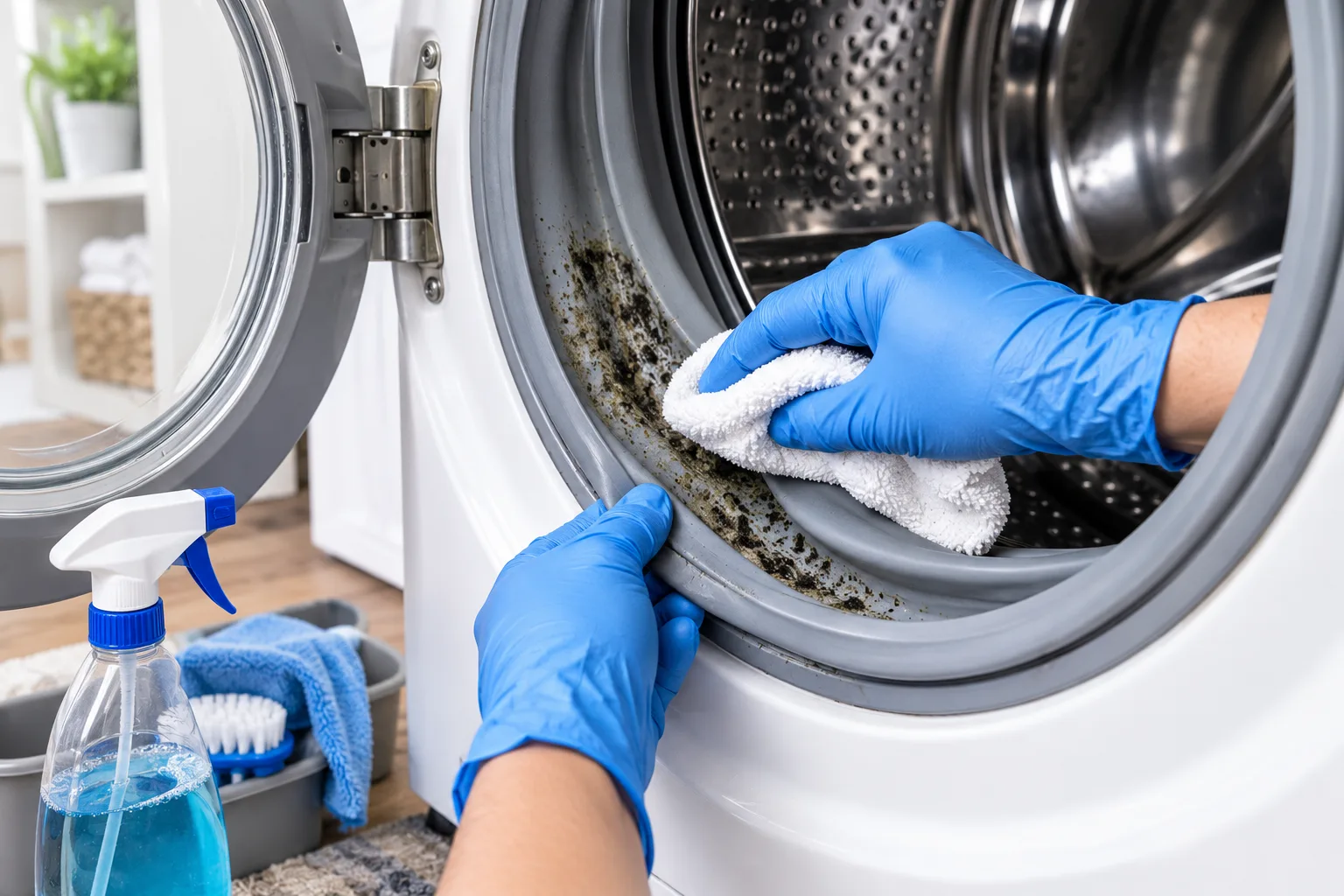
Most moldy washer gaskets can be cleaned with a vinegar-and-baking-soda scrub or diluted bleach, worked into the folds where mold actually grows, followed by a hot wash to rinse it out. If the gasket is torn, split, or so deeply stained that mold keeps coming back within days of cleaning, cleaning alone won’t fix it, and the seal needs replacing.
Key takeaways
- Surface mold on a gasket that’s otherwise intact usually responds to cleaning. Mold inside a tear or crack usually doesn’t
- Vinegar and baking soda is the gentler first method. Diluted bleach is the stronger second option if vinegar alone doesn’t clear it
- A hot wash cycle with the door left open afterward is what actually dries the gasket out and stops mold from regrowing right away
- Mold that returns within days, a gasket that’s torn or split, or staining that scrubbing won’t lift are the signs cleaning isn’t enough anymore
- Appliance Gasket quotes one exact price after getting your washer’s brand and model, with a $75–$95 diagnostic fee credited toward your repair, and offers same-day service across DC, Maryland, and Northern Virginia
- Call (202) 200-8501 for a model-based quote
Check how bad the mold actually is before you clean
Pull the gasket fold gently away from the frame and look at where the mold sits. Surface mold sitting on top of intact rubber, with no tears or cracks underneath, is the kind cleaning can usually handle. Mold that’s grown into a split, a tear, or a section where the rubber has gone soft or brittle is sitting somewhere a brush can’t fully reach, and that’s the version that tends to come back no matter how it’s cleaned.
Run your fingers along the whole gasket, not just the spots you can see mold on. Washer gaskets fold in on themselves, and a lot of the moisture and buildup that feeds mold sits in that inner fold rather than on the visible surface. If the rubber feels firm and flexible everywhere you check, the cleaning steps below should work. If you find a spot that feels stiff, cracked, or pulled away from its channel, that’s worth noting now, since it points toward the washer door gasket needing replacement rather than another round of cleaning.
This quick check decides which of the next two sections actually applies, and it takes under a minute.
Clean it with vinegar and baking soda first
Soak a cloth in white vinegar, wipe down the entire gasket fold, let it sit for 10 to 15 minutes, then scrub the moldy spots with a baking soda paste and an old toothbrush, working into the fold rather than just across the surface. Rinse the toothbrush often so you’re not spreading mold back onto a spot you already cleaned.
Tom’s Guide’s own cleaning guide describes this same vinegar-soak-then-scrub approach, and notes that low-temperature washes and liquid detergent residue are part of what feeds the mold in the first place. That matters for a lot of DC, Maryland, and Northern Virginia households, since cold and warm wash cycles are common choices for everyday loads, and each one leaves more of that residue behind in the gasket than a hot wash would.
This method is gentler on the rubber than bleach and is worth trying first, especially on a washer door gasket that’s otherwise in good shape. If the mold lifts and the fold looks clean once you wipe it down, you’re done, and the hot wash step below is all that’s left. If staining is still visible after a full vinegar-and-baking-soda pass, move to the stronger method next.
| Method | Best for | Strength on set-in mold | Safety note |
| Vinegar and baking soda | Light to moderate surface mold, first attempt | Moderate | Safe on rubber, no fumes, no gloves required |
| Diluted bleach | Mold that didn’t lift with vinegar, visible staining | Strong | Wear gloves, work in a ventilated room, never mix with other cleaners |
Use diluted bleach if vinegar alone doesn’t clear it
Mix diluted bleach in a small container, dip an old toothbrush in it, and scrub the moldy sections of the gasket fold, rinsing the toothbrush and reapplying as needed until the staining lifts. Wipe the whole gasket down afterward with a clean, damp cloth to remove any bleach residue before running another load.
Wear gloves and work in a ventilated room. Bleach fumes build up quickly in an enclosed laundry space, especially in a basement laundry setup common in a lot of older DC and Northern Virginia rowhouses, where airflow is already limited. Never mix bleach with vinegar, ammonia, or any other cleaner at the same time, since the combination can produce dangerous fumes.
Bleach reaches mold that a vinegar scrub sometimes can’t fully lift, particularly on staining that’s set in for a while. It’s a stronger step, not a first move, which is why it belongs after the gentler method rather than before it. If the staining still won’t lift after a full bleach pass, that’s a real signal the mold has gone deeper into the rubber than cleaning can reach, which the checklist further down covers in detail.
Finish with a hot wash to rinse and dry it out
Run an empty wash on the hottest cycle available with a cup of vinegar or a washing machine cleaner in the drum, then leave the door propped open for an hour or two afterward so the gasket actually dries instead of sitting damp.
Electrolux’s own support guidance recommends running hot maintenance cycles at 60°C or above specifically to keep the seal from regrowing mold between cleanings. Skipping this step is one of the most common reasons mold comes back within a week of a cleaning that otherwise worked.
Propping the door open matters as much as the hot wash itself. A gasket that’s been scrubbed clean but then sealed shut inside a closed washer is sitting in the same warm, damp conditions that grew the mold to begin with. Give it the couple of hours it needs to actually dry before the next load goes in.
Why the mold keeps coming back
A washer gasket grows mold because its folds trap water and detergent residue in a warm, dark space after every load, and anything that leaves moisture sitting there longer, cold washes, too much detergent, or a door kept shut between loads, makes it worse.
Front-load washers are more prone to this than top-load machines simply because the door seals shut against a gasket that holds standing water in its lower folds, while a top-load lid doesn’t trap moisture the same way. Humid stretches of a Washington DC, Maryland, or Northern Virginia summer make the laundry room itself slower to dry out between loads, which gives a gasket that’s already holding moisture even less chance to air out on its own.
Cutting back on liquid fabric softener, measuring detergent instead of guessing, and leaving the door cracked open between loads are the habits that actually slow regrowth down, rather than just cleaning it away each time. None of these habits undo mold that’s already set into a torn or cracked gasket, though, which is where the checklist below comes in.
When cleaning isn’t enough: signs the gasket needs replacing
A washer door gasket needs replacing, not another round of cleaning, when any of these show up:
- The rubber is torn, split, or cracked anywhere along the fold
- Mold returns within a few days of a thorough cleaning rather than weeks or months
- Staining stays dark or black even after scrubbing with both vinegar and bleach
- The gasket feels stiff, brittle, or has pulled away from its channel
- A musty smell persists after a full clean-and-dry cycle
Any one of these means the rubber itself has broken down enough that cleaning can only ever be temporary. A torn gasket can’t seal properly even after every trace of mold is gone, which means the leak and the moisture problem that feeds mold in the first place are both still there.
Appliance Gasket’s washer gasket repair and replacement service covers exactly this kind of diagnosis, confirming from a photo and the washer’s model whether a new gasket or a deeper issue is the actual problem. That model-specific check matters, since a gasket that looks like a universal fit often isn’t, and getting the wrong one wastes the money a cleaning attempt was supposed to save in the first place.
Is it worth replacing, or should you just keep cleaning?
If the washer is otherwise working fine and the only issue is a gasket that’s reached one of the signs above, replacing just the gasket is almost always the smaller cost compared to living with a recurring mold problem or a leak that follows once the seal fails completely.
For the actual cost range and what makes it vary by brand and model, our guide on washer door gasket replacement cost in DC, MD & VA breaks that down in detail. It also covers why a moldy gasket that’s gone past cleaning tends to cost the same to replace as a torn one, since the part itself is the same either way.
Renters dealing with a moldy seal in a unit they don’t own face a different question entirely: whether the mold is a maintenance habit or a landlord-side defect. Our guide on landlord responsibility for a moldy washer seal in Virginia and Maryland walks through that distinction and what each state’s law actually says.
The bottom line
Check how bad the mold actually is first, clean with vinegar and baking soda, step up to diluted bleach if needed, then finish with a hot wash and an open door to keep it from coming right back. If the washer door gasket is torn, keeps growing mold within days, or won’t come clean no matter the method, that’s the point to call a technician instead of reaching for another cleaner. Appliance Gasket quotes one exact price after getting your washer’s brand and model, with a $75–$95 diagnostic fee credited toward your repair, and offers same-day service across DC, Maryland, and Northern Virginia.
Get your washer door gasket cleaned or replaced in DC, MD & VA
If cleaning hasn’t solved it, or the signs above point to a gasket that’s past cleaning, the next step is a model-based diagnosis rather than another round of scrubbing. Send your washer’s brand, model, and ZIP code and Appliance Gasket will quote one exact price with a $75–$95 diagnostic fee credited toward your repair, with same-day appointments available across Washington DC, Maryland, and Northern Virginia.
If you’d rather talk through what you’re seeing before booking anything, reach out through our contact page and we’ll walk through it with you.
Appliance Gasket
Phone: (202) 200-8501
Email: Ilhamfraidoon@gmail.com
Address: Fairfax City, VA 22031
Serving Washington DC, Maryland & Northern Virginia
Frequently asked questions
Q1: Can I use natural ingredients instead of bleach?
Yes. Vinegar and baking soda handle light to moderate mold without any bleach at all, and they’re gentler on the rubber over repeated use. A dedicated mold and mildew remover is a middle option worth trying before bleach if the vinegar-and-baking-soda pass doesn’t fully clear it, since it’s formulated to penetrate mold without the fumes bleach produces.
Q2: Why do front-load washers get moldy more than top-load washers?
A front-load washer’s door seals shut against a gasket that holds standing water in its lower folds every time the drum spins, while a top-load lid sits above the water line and doesn’t trap moisture the same way. That design difference, not a quality difference between brands, is why front-load owners deal with gasket mold far more often.
Q3: How often should I clean the gasket to keep mold from coming back?
Wiping the visible fold dry after each load and running a full cleaning pass, vinegar and baking soda or bleach followed by a hot wash, every two to four weeks keeps most gaskets ahead of mold. A washer used daily or in a humid laundry room needs the full pass closer to every two weeks rather than waiting for visible staining to show up again.
Q4: Is it safe to mix bleach and vinegar when cleaning the gasket?
No, and this is one combination to avoid completely. Mixing bleach and vinegar produces chlorine gas, which is dangerous in the small, often poorly ventilated laundry spaces where washers are installed. Use one method at a time, rinse the gasket thoroughly, and let it dry before switching to the other if the first one didn’t fully work.
Q5: Can a moldy gasket make my washer smell even when it’s not running?
Yes. Mold trapped in the gasket folds keeps producing a musty odor whether the washer is mid-cycle or sitting idle, since the moisture and organic buildup feeding it doesn’t go away on its own. If the smell is noticeable from across the laundry room with the door closed, that’s usually a sign the mold has spread further into the fold than a quick wipe-down will reach.
Q6: Does a landlord have to fix a moldy washer gasket in a rental?
It depends on whether the mold comes from a defect in the unit or from how the washer is used, and the answer differs between Virginia and Maryland law. Our dedicated guide on landlord responsibility for a moldy washer seal covers exactly how that distinction works in each state.