
The habits that wear out appliance door seals fastest are using harsh cleaning chemicals, slamming or forcing the door shut, overloading the appliance, skipping regular cleaning, letting moisture sit in the seal, ignoring small tears, and replacing a worn seal with a non-matched part. Each one causes a different kind of damage, but all seven apply across refrigerators, washers, dishwashers, ovens, and dryers, not just one appliance in your kitchen or laundry room.
Key takeaways
- The 7 habits: harsh chemicals, slamming or forcing doors, overloading, skipping cleaning, trapped moisture, ignoring small tears, and non-matched replacement parts
- These habits damage seals on refrigerators, washers, dishwashers, ovens, and dryers alike, not just one appliance
- A seal that fails early from a habit is preventable, unlike normal age-related wear
- Washer door seals are especially prone to mold when moisture is left trapped after a cycle
- Catching damage early (cleaning, reshaping) is almost always cheaper than a full seal replacement
- Appliance Gasket quotes one exact price after getting your appliance’s brand and model, with a $75–$95 diagnostic fee credited toward your repair, and offers same-day service across DC, Maryland, and Northern Virginia
- Call (202) 200-8501 for a model-based quote
Using harsh cleaning chemicals on the seal
Bleach and ammonia-based cleaners break down rubber over time, drying it out until it cracks instead of flexing. This happens on any appliance with a rubber door seal, not just refrigerators. A washer gasket wiped down with a bleach-heavy disinfectant, a dishwasher seal scrubbed with an abrasive degreaser, or an oven gasket hit with harsh oven-cleaner overspray all wear out the same way: the chemical strips the rubber’s natural oils, and the seal loses the flexibility it needs to close tight.
The fix is simple and doesn’t cost anything. A mix of warm water and mild dish soap, applied with a soft cloth, cleans a seal just as well without the chemical damage. For set-in grime, a paste of baking soda and water works on tougher spots without touching the rubber’s surface the way a stronger cleaner would.
Slamming or forcing the door shut
Forcing a door that doesn’t close easily puts sudden, uneven stress on the seal at exactly the point of impact, usually one corner or edge rather than the whole gasket. A refrigerator door that doesn’t align correctly, a dishwasher door that catches on a rack, or a washer door that needs a hard push to latch are all signs something is already slightly off, and forcing it shut every time makes that one spot wear out well before the rest of the seal does.
The better habit is checking what’s actually stopping the door from closing easily before pushing harder. On a refrigerator or dishwasher, that’s often a shelf or rack sitting just slightly out of place. On a washer, it can be a piece of clothing caught in the door track. Clearing the actual obstruction protects the seal in a way that forcing the door never will.
Overloading or overpacking the appliance
An overloaded washer strains the door seal at the point where it meets the drum, since extra weight shifts the load off balance and pulls unevenly on the gasket with every spin cycle. An overpacked refrigerator or freezer does something different but just as damaging: when food is stacked against the door, the door can’t close flush, so the gasket sits under constant pressure trying to compensate for a gap that shouldn’t be there.
Both problems are avoidable. Leaving a few inches of clearance around a washer’s maximum fill line keeps the load balanced through the spin cycle. On a refrigerator, keeping shelves far enough back that nothing presses against the door when it closes lets the gasket do its job without fighting a gap it was never built to seal.
Skipping regular cleaning
Food residue, soap scum, and everyday grime left in the fold of a door seal stiffen the rubber over time and create spots where the seal no longer closes evenly. This shows up most on refrigerators, where crumbs and spills collect in the gasket’s accordion fold, and on dishwashers and washers, where soap residue and lint build up in the same way.
A monthly wipe-down with a soft cloth and mild soap keeps the fold flexible and catches small problems before they become a full leak. It’s also worth checking whether the seal is already losing its grip. The dollar-bill test is a quick way to find out: close a dollar bill in the door and pull gently. If it slides out easily instead of resisting, buildup or wear has already affected how well that seal closes.
Letting moisture sit in the seal, especially on washers
A washer door seal left closed and damp after a cycle is the single biggest cause of mold growth in the fold of the gasket. Front-load washers are the most affected because their door seals hold water in the bottom curve of the gasket long after the cycle ends, and a closed door traps that moisture with nowhere to go. Within a few days, that trapped moisture turns into the musty smell and dark spotting that signal mold has already taken hold.
Leaving the washer door open between loads, even just a few inches, lets the seal air dry and stops mold before it starts. Wiping the fold dry with a cloth after the last load of the day does the same thing faster. This matters even more in a rental, where a moldy seal can turn into a dispute over who’s responsible for fixing it. If that’s your situation, Virginia and Maryland both have specific rules about how quickly a landlord has to address it.
Ignoring small tears or soft spots
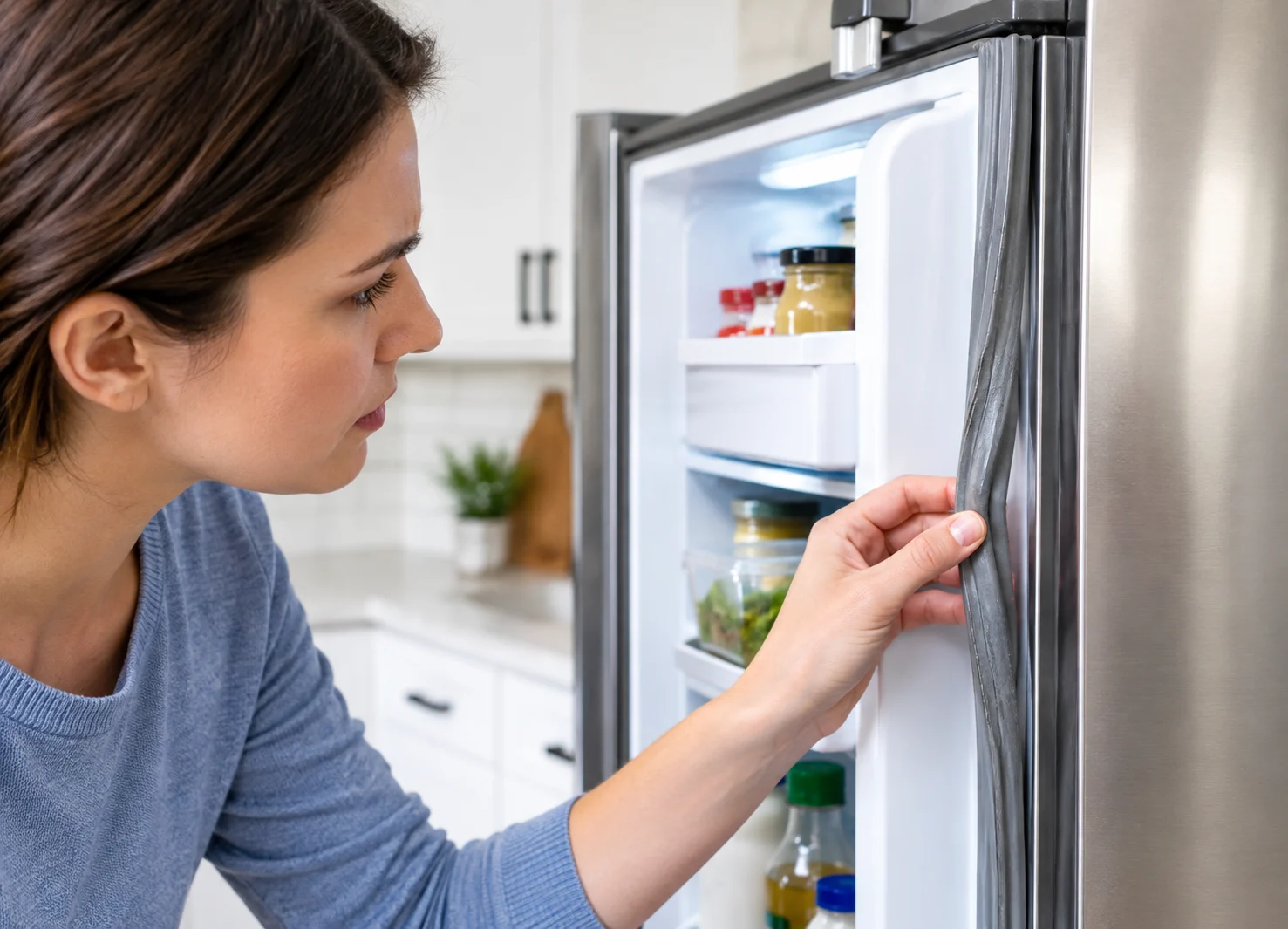
A small tear in a door seal doesn’t stay small. Every time the door opens and closes, the gap at that tear widens slightly, and what started as a pinhole or a soft, thinning spot turns into a seal that can’t hold a tight close anymore. This is true whether it’s a refrigerator gasket, a washer boot, or a dishwasher door seal: the damage compounds with every cycle rather than staying the same.
Catching a tear early is the difference between a seal that can sometimes be reshaped or patched and one that needs a full replacement. Running a hand along the gasket fold every few months, checking the corners especially, catches soft spots and small tears while they’re still cheap to deal with.
Replacing a seal with a non-matched or universal part
A universal gasket that isn’t matched to the exact brand and model rarely seats correctly in the mounting channel it’s meant to fill, so it fails again faster than the worn part it replaced. The curve, the thickness, and the channel profile are specific to each manufacturer’s design, and a part that’s close enough to fit on the shelf often isn’t close enough to hold a seal once it’s installed.
Getting the exact OEM-matched part for your appliance’s brand and model is what makes a replacement actually last. Appliance Gasket sources the correct gasket for your specific model rather than a generic fit, which is the main reason a professional replacement holds up where a universal part often doesn’t.
The bottom line
Every one of these seven habits causes damage that’s avoidable, not inevitable. A seal that’s cleaned regularly, closed without force, and replaced with the correct matched part when it does wear out will outlast one that’s neglected, no matter what brand or appliance it’s on. Appliance Gasket quotes one exact price after getting your appliance’s brand and model, with a $75–$95 diagnostic fee credited toward your repair, and offers same-day service across DC, Maryland, and Northern Virginia.
Get your appliance door seal checked in DC, MD & VA
If a seal is already showing damage from one of these habits, catching it now is cheaper than waiting for a full appliance replacement later. Appliance Gasket quotes one exact price after you send your appliance’s brand, model, and ZIP code, with a $75–$95 diagnostic fee credited toward your repair, and offers same-day appointments across Washington DC, Maryland, and Northern Virginia. Reach out through our contact page to get your quote started.
Appliance Gasket
Phone: (202) 200-8501
Email: Ilhamfraidoon@gmail.com
Address: Fairfax City, VA 22031
Serving Washington DC, Maryland & Northern Virginia
Frequently asked questions
Q1: How often should you clean a refrigerator door gasket?
A refrigerator door gasket should be cleaned about once a month under normal use, or more often in a busy kitchen where spills and crumbs build up faster. Regular cleaning keeps the rubber flexible and catches early buildup before it affects how well the door seals.
Q2: Is it safe to use petroleum jelly or silicone on any appliance door seal?
A thin layer of petroleum jelly or a silicone-based conditioner is generally safe on most rubber door seals and helps keep the material from drying out, but it’s worth checking your appliance’s manual first since some manufacturers specify a particular type of conditioner for their gaskets. Avoid petroleum-based products on silicone seals specifically, since the two materials don’t always react well together.
Q3: Can a worn door seal be fixed without replacing it entirely?
A seal that’s only slightly warped can sometimes be reshaped with gentle heat and pressed back into place, but a seal that’s torn, cracked, or has lost its flexibility needs a full replacement. Reshaping works because the rubber can still hold its original form; once it’s torn or brittle, there’s nothing left to reshape.
Q4: Does leaving a washer door closed right after a cycle cause mold?
Yes, closing a washer door right after a cycle traps the moisture left in the seal’s fold, and that trapped moisture is what allows mold to grow within a few days. Leaving the door open between loads, even just a few inches, lets the seal air dry and is the single most effective habit for keeping mold out of a front-load washer’s gasket.
Q5: Why is my dishwasher leaking from the bottom of the door?
A dishwasher leaking from the bottom of the door is almost always a sign the door seal has hardened, cracked, or collected enough debris that it can no longer form a tight seal against the tub. Checking the gasket for visible gaps or stiff spots is the first step before assuming the problem is somewhere else in the machine.
Q6: Is it safe to keep using an oven with a damaged door seal?
An oven with a damaged door seal is generally safe to keep using in the short term, but it loses heat during cooking, which means longer cook times and less consistent results, especially during baking. A damaged seal doesn’t typically pose a safety risk the way a gas leak would, but it’s worth replacing once you notice it since the energy loss adds up over repeated use.